Module 7: When things go wrong · Lesson 55 of 79 · 5:27 · English
Who can give what: compensation limits, incident reports and follow-up
Join the waiting list
Log in
Free. We create your login and email it to you. All 79 lessons included.
What you will learn
In this lesson you learn to use an authority (compensation) matrix - what front-line staff, supervisors, the Duty Manager and the GM may give; match the gesture to the problem; record every compensation with reason and approver; know when an incident report is required and write one with facts only; review and fix the cause; follow up with the guest and handle the online review after an incident.
Transcript
0:00
Welcome to the hotel operations course. In this video you will learn who may give what compensation, how to write an incident report, and how to follow up with the guest after an incident.
0:14
An upset guest wants a solution now. If the staff member does not know what they may give themselves, the guest waits and the anger grows. That is why every hotel needs a clear list of who may decide what.
0:28
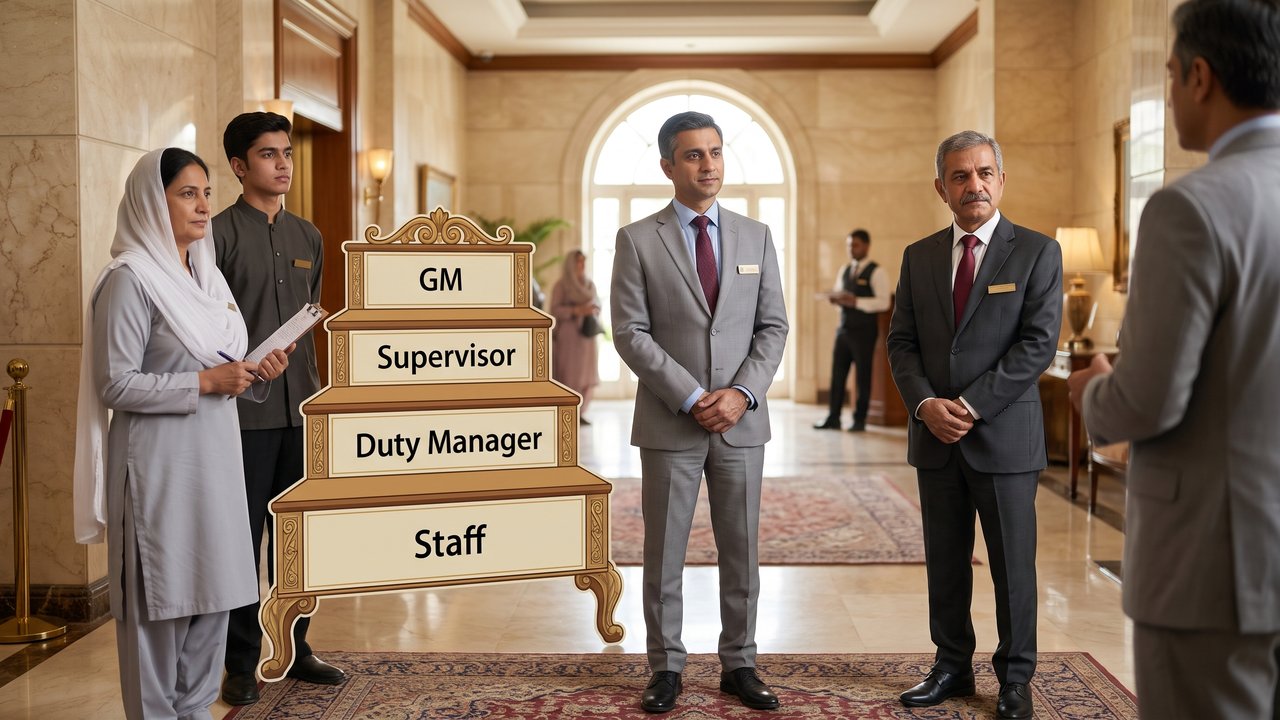
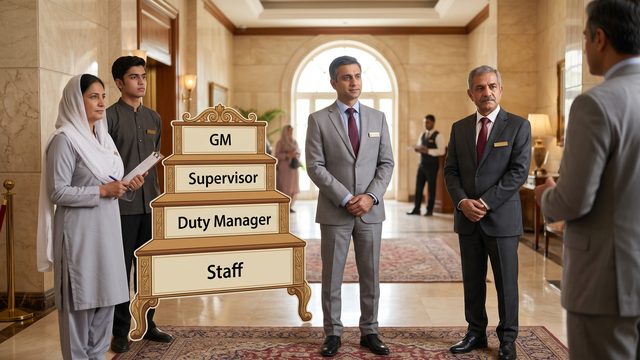
This is called an authority matrix: how much each level of staff may give on their own. Every hotel sets its own limits. Here we look at one example of how it can work.
0:41
For example, the front desk or a waiter on their own: with an apology, free tea, coffee or a dessert, a fruit plate, waiving a small laundry or minibar charge, and a short late check-out if the room is free.
0:55
In the example, a supervisor or shift leader: taking a whole dish or meal off the bill, free laundry, and an upgrade if a room is free. Each level also has a rupee limit, which management gives in writing.
1:09
In the same example, the duty manager: a rebate on one night's room charge, or a free dinner. The GM: a whole night free, a refund, a doctor's bill, and everything to do with injury, theft or a legal matter.
1:24
The gesture should match the problem and the trouble caused. Solving the problem matters more than any gift. First ask the guest what they want. Very often, the guest only wants a solution and an apology.
1:39
Never promise more than your limit, and never hand over cash. Say: let me speak to the manager, and I will come back to you in ten minutes. Then come back on time.
1:52
Management's promise: if you made a good-faith decision within your limit, the manager will not reverse it and will not blame you. That trust is what lets staff decide quickly.
2:05
Every rebate is recorded in the PMS. On the bill, pressing Rebate under More fills in the whole amount due, so correct the amount to the approved figure, and write the reason in the memo.
2:17
Every rebate carries the reason and the name of the person who approved it. The night audit and the GM review this list. A rebate without a reason raises questions, even when the intention was good.
2:32
Now the incident report. Every injury, illness, theft complaint, damage, security incident, and every large rebate gets a report. In our hotel, this is a paper form or the duty manager's log book.
2:46
The report is written by the staff member who saw or handled the incident, in the same shift, ideally within half an hour. Written late, details are forgotten and the witnesses have gone.
2:59
In the report, write the actual time and date of the incident, not of writing the report, the exact place, the names of everyone involved and of the witnesses, their roles and their phone numbers.
3:11
Facts only, in order: what you saw, what you heard, what you did. No guesses, opinions or blame. Write the guest's own words exactly. Do not write that the guest was careless; write what happened.
3:25
Also write: what the injury was and what first aid was given, who was informed and when, such as the manager, the police or Rescue eleven twenty-two, what was offered to the guest, and the photos and the CCTV time.
3:40
The writer and the manager both sign the report. Keep the original in a secure file. Insurance or legal questions can come up years later, so keep it for several years, according to hotel policy.
3:53
Within 24 to 48 hours, the manager reviews the report, finds the root cause and has it fixed, for example through an engineering repair job. Write that job's number on the report, so the two stay linked.
4:09
Follow up with the guest: if they are still in the hotel, ask after them in person the next day; if they have left, call or email. Whatever was promised, such as a refund, is delivered on time.
4:24
If the guest writes an online review about the incident, the manager replies: thanks, an apology, and what was improved. Do not mention the room number, the illness or any personal detail, do not argue, and invite direct contact.
4:40
Every month, review the incident log to see which problems keep coming back, such as the same tile, the same dish or the same lift. Record the near misses too, the incidents that almost happened.
4:53
Writing an honest report is your own protection, and an honest report is never punished. Hiding an incident is the biggest mistake, because then the hotel can help neither the guest nor you.
5:06
Remember: know your limit, match the gesture to the problem and record it in the PMS, bigger promises come from the manager, report in the same shift with facts only, fix the cause, and follow up with the guest. Thank you.
Module 7
When things go wrong
 46. Hair, insect or glass in the food
5:21
 47. "Your food made me sick": illness and allergic reactions
5:08
 48. Bathroom overflow, leaks and water in the room
5:22
 49. Dirty room, wrong room, bad smell and pests (bed bugs, cockroaches)
5:12
 50. Power cut, AC, hot water, Wi-Fi and a guest stuck in the lift
5:14
 51. Noise, parties, drunk or abusive guests and harassment
5:18
 52. "Something was stolen from my room", lost valuables and guest damage
5:18
 53. Booking not found, overbooked: walking a guest
5:06
 54. A guest falls, gets hurt or becomes ill
5:18
 55. Who can give what: compensation limits, incident reports and follow-up
5:27