Module 11: Mocktails and cold drinks · Lesson 70 of 79 · 5:43 · English
Fresh juices, lemonade, shakes and smoothies
Join the waiting list
Log in
Free. We create your login and email it to you. All 79 lessons included.
Transcript
0:00
Welcome to the chef course. In this video you will learn how to make fresh juices, lemonade, milkshakes and smoothies to a recipe, and how to keep them safe and fresh for the guest.
0:13
A guest orders fresh juice because they do not want juice from a carton. Use the fruit of the season: kinnow and pomegranate in winter, mango and watermelon in summer, and banana, apple and carrot all year round.
0:29
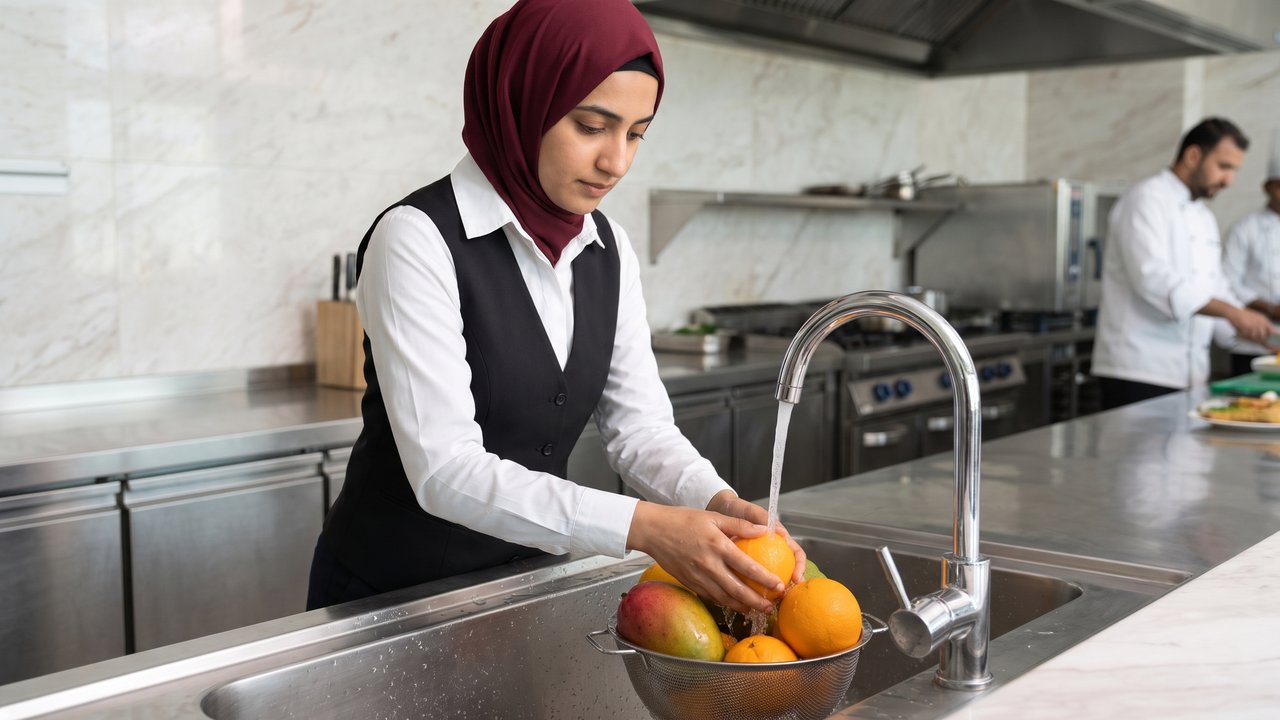
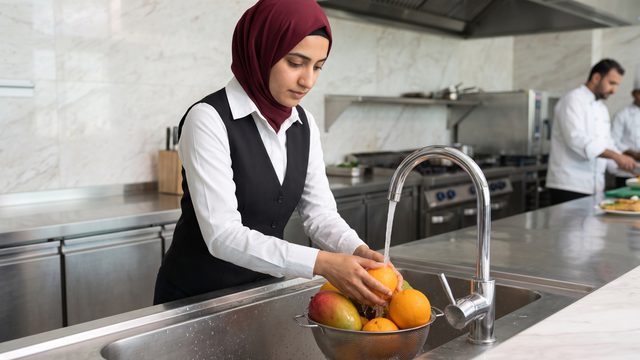
Always wash fruit under running water before you cut it, even if you are going to peel it. Germs on the skin travel inside with the knife. Keep the fruit board and knife completely separate from anything used for raw meat.
0:44
Make fresh juice for each order and serve it at once. Cut the kinnow or orange in half, press it on the squeezer, and catch the seeds with a strainer. Ask the guest before adding ice, because ice waters the juice down.
0:59
Fresh juice is not pasteurised, so it spoils quickly. If any is left over, cover it, put it in the fridge at once, and use it the same day. Never leave juice out for more than two hours.
1:12
Soft fruit like watermelon goes through the blender and then through a sieve, while pomegranate goes into the juicer. Each fruit has its own flavour, so usually add no extra sugar. If the guest asks, offer syrup.
1:27
Rinse the juicer and the blender after every order, and at the end of the shift take them apart and wash every part in hot soapy water. Leftover pulp rots quickly and attracts flies and germs.
1:40
Now lemonade. Here, shikanjabeen, the salted lemon drink, is also very popular. The rule is the same: fresh lemon juice, sweetness, cold water, everything measured, so every glass tastes the same as the last.
1:56
For one glass: 60 millilitres of fresh lemon juice, 45 millilitres of sugar syrup and 150 millilitres of chilled water, with ice on top. For shikanjabeen, add a pinch of black salt; for a mint flavour, a few mint leaves.
2:14
For a banquet, make a big jug: one cup of lemon juice, one cup of syrup and three cups of water. Put the ice in the glasses, not in the jug, or the lemonade turns watery. Taste every jug and adjust it.
2:29
Now the milkshakes. In summer the mango shake is the favourite drink in our cafe. Sweet mangoes, such as Sindhri or Chaunsa, and cold full-cream milk make it thick and delicious, with no extra tricks.
2:43
For one glass: about 200 grams of ripe mango, 180 millilitres of cold full-cream milk, one to two tablespoons of sugar, and two or three ice cubes. If the mango is very sweet, you do not need the sugar.
2:59
Blend for about 30 to 45 seconds, until it is smooth. Every mango has a different sweetness, so taste it and adjust. If the guest wishes, add a scoop of vanilla ice cream on top before serving.
3:14
The banana shake sells all year: one ripe banana, about 200 millilitres of cold milk, a spoon of sugar or honey, and a little ice. The riper the banana, the less sugar you need to add.
3:29
The difference between a shake and a smoothie: a shake is made with milk, sometimes with ice cream. A smoothie is made with yogurt and frozen fruit; it is thicker and usually less sweet than a shake.
3:42
For a banana smoothie: one frozen banana, about 80 grams of plain yogurt, 60 millilitres of cold milk, and if you like, a teaspoon of honey or two or three dates. Blend until it is thick and smooth.
3:57
Always take milk and yogurt from the fridge and check the expiry date. Serve a shake or a smoothie as soon as it is made, and never leave leftover milk standing on the counter in the heat.
4:10
Rinse the blender jar between one order and the next, especially when a juice follows a milk drink. That way the flavours do not mix, and no milk or nuts reach a guest who has an allergy.
4:23
When you take the order, ask: less sugar, or none? Any problem with milk? For guests with diabetes, make juice or lemonade without sugar. If a drink will have almonds or other nuts, always ask about allergies first.
4:40
The waiter enters every drink in the POS of your PMS first: the cafe department, then the box for the drink, such as Mango Milkshake. The price appears by itself, and every glass is accounted for.
4:54
Presentation is part of the taste. A clean tall glass, no mark or drip on the rim, fresh garnish, a coaster, a straw and a napkin. Tell the guest the name of the drink as you serve it.
5:07
At the end of the shift, wash the blender, the juicer, the board and the knife thoroughly. Throw away leftover cut fruit and old juice, and record what was wasted in the wastage record, so the manager knows the real spend.
5:22
Remember: wash the fruit before cutting, juice fresh per order and used the same day, lemonade measured, cold full-cream milk in shakes, yogurt in smoothies. Ask about sugar and allergies, and keep everything clean. Thank you.
Module 11
Mocktails and cold drinks
 68. Mocktail bar basics: tools, sugar syrup, ice hygiene, glassware and garnish
5:32
 69. Classic mocktails: mint lemonade (mint margarita), mint lime cooler, blue lagoon, pineapple coconut cooler
5:54
 70. Fresh juices, lemonade, shakes and smoothies
5:43