Module 9: Breakfast · Lesson 62 of 79 · 5:57 · English
Breakfast buffet set-up and the live egg station
Join the waiting list
Log in
Free. We create your login and email it to you. All 79 lessons included.
Transcript
0:00
Welcome to the chef course. In this video you will learn to set up the breakfast buffet: the layout, the temperature of hot and cold food, how to refill the dishes, and how to run a live egg station.
0:14
The evening before, ask the front office how many guests will come to breakfast tomorrow, how many rooms have breakfast included in the rate, and whether there are groups or families with children. Plan your quantities from that.
0:29
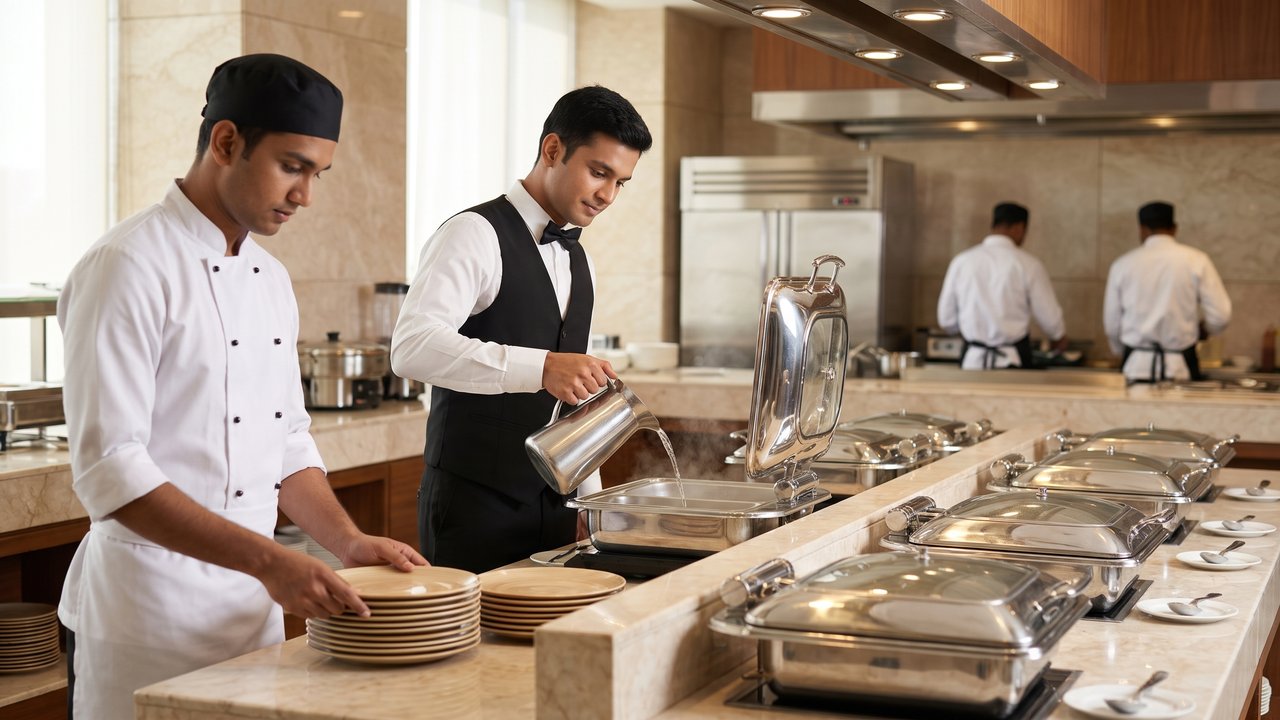
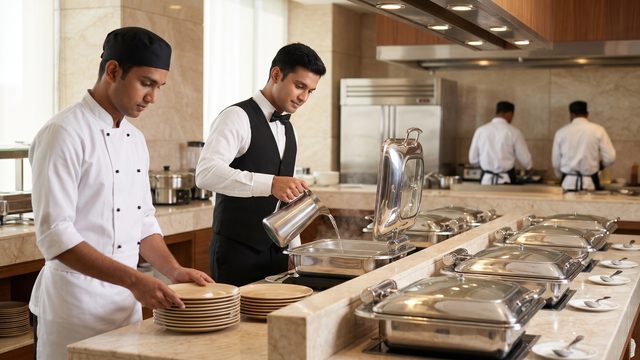
Start the set-up about one hour before the buffet opens. Pour hot water into the chafing dishes to preheat them, lay out plates, cutlery and napkins, and check the light and the power socket at every station.
0:44
Lay out the buffet so the guest walks one way: plates first, then cold items like fruit and yoghurt, then the hot food, then the bakery, and tea and juice at the end. In a rush, put plates at both ends.
0:58
The cold section: cut fruit, yoghurt, cheese, milk for cereals and juice, all below 5 degrees Celsius. Set them on crushed ice or a chilled counter, and use small dishes so fresh ones come out often.
1:13
The hot section: a chafing dish only keeps food hot; it does not cook it. So the food must come from the kitchen fully hot and stay at 63 degrees Celsius or above on the buffet. Keep the lids closed.
1:29
As soon as the buffet opens, check the temperature of every hot and cold dish with a probe thermometer and write it in the log. Repeat during service, for example every hour. If a reading is low, tell the chef at once.
1:44
Place an allergen card in front of every dish. Its simple icons show whether the dish contains egg, milk, nuts, wheat or fish. For a guest with an allergy this card matters a great deal. Mark the vegetarian dishes too.
2:00
Every dish has its own spoon or tongs, resting on a small underplate. Never let the spoon from one dish go into another; that risks an allergy and spoils the taste. Replace a dirty spoon at once, as the waiter does here.
2:17
The refill rule: never pour new food on top of old food. Take away the almost empty dish and put in a fresh, full one. Do not send food out in large quantities; send small pans often from the kitchen.
2:32
Food that has been without temperature control for more than two hours is thrown away. And the rule is simple: anything that was displayed on the buffet in front of guests is never reused, not tomorrow, and not for staff meals.
2:47
The bakery station: bread, toaster, butter, jam, honey, croissants and muffins. Keep a separate board and bread knife just for cutting bread. Place tongs beside the toaster, and remove any burnt pieces straight away.
3:03
The Pakistani section: chana, halwa and aloo bhujia in chafing dishes, and parathas in a hot covered container. If possible, set up a live paratha station where a cook makes fresh parathas in front of the guests.
3:19
Now the live egg station. An induction or gas burner, two or three non-stick pans, butter, a small jug of beaten eggs, and bowls of fillings: onion, tomato, green chilli, capsicum, mushrooms, cheese and coriander.
3:35
Keep the eggs and fillings on a tray of crushed ice, never out in the heat. Beaten eggs come out in small jugs, only for omelettes cooked right through; a fried egg is cracked fresh. Discard leftover beaten egg at the end.
3:51
The cook's uniform and cap must be clean, with a separate cloth and sanitiser at the station. Egg shells go straight into the bin, and after touching raw egg, clean your hands before you touch a finished plate.
4:06
At a live station, the cook's manner matters most. Greet the guest with a smile, ask how they would like the egg and with which fillings, and repeat the order back. The guest watches both your hygiene and your speed.
4:20
Hand over the omelette or fried egg on a warm plate within one or two minutes. If the queue grows, take the guest's table number and say the waiter will bring it to the table, so nobody stands waiting.
4:33
For a guest with an allergy, take a clean pan and a clean spatula, and keep the cheese and filling spoons out of their food. A runny yolk only when the guest asks, and fully cooked eggs for children, like this one.
4:47
During service, the chef or a supervisor walks the buffet, for example every 15 minutes: empty dishes, spilled food, dirty spoons, temperatures and napkins. The waiter cleans up at once and tells the kitchen what is running low.
5:04
About half an hour before closing, stop sending out large dishes and refill in small quantities, so less is wasted. But the last guest must still find a full, fresh-looking buffet, like these neat half-size pans.
5:19
When the buffet closes, discard the leftover buffet food. Food that stayed in the kitchen, covered and at the right temperature, is cooled and kept under the normal rules. Wash the chafing dishes, sanitise the counter, and record the waste.
5:36
Remember: get the guest count in advance, set up one hour before, hot above 63 degrees Celsius, cold below 5 degrees Celsius, swap dishes rather than top them up, allergen cards, and a smiling live egg station. Thank you.
Module 9
Breakfast
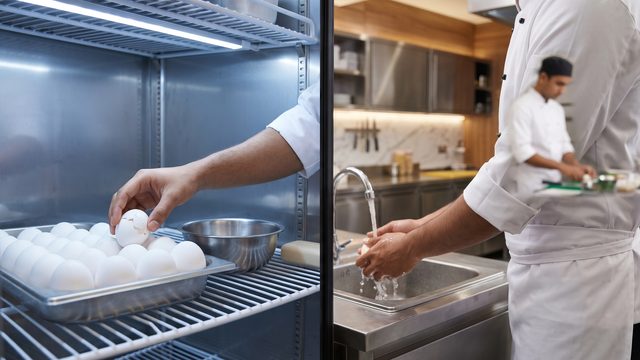 59. Eggs to order: fried, scrambled, boiled, poached and omelette
5:50
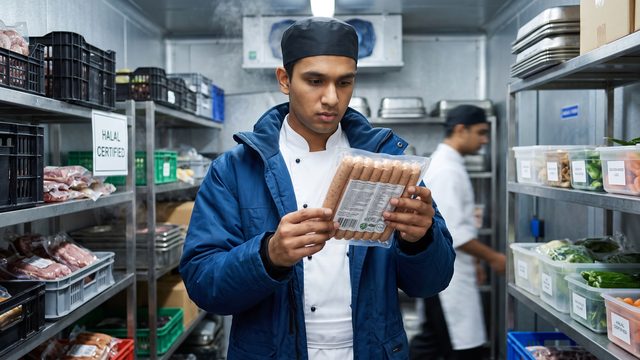 60. Continental breakfast: toast, French toast, pancakes, hash browns, sausages and beans
5:55
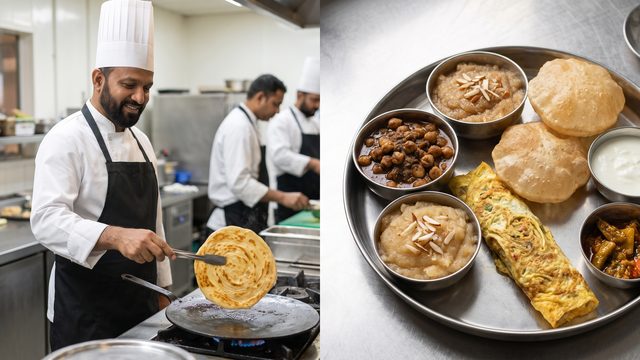 61. Pakistani breakfast: paratha, aloo paratha, chana, halwa puri and masala omelette
6:10
 62. Breakfast buffet set-up and the live egg station
5:57