Module 8: Kitchen foundations · Lesson 56 of 79 · 5:49 · English
Kitchen basics, mise en place and recipe cards
Join the waiting list
Log in
Free. We create your login and email it to you. All 79 lessons included.
Transcript
0:00
Welcome to the chef course. In this video you will learn the basics of a hotel kitchen: the kitchen team, mise en place, which means getting everything ready before you cook, and how to read and use a recipe card.
0:15
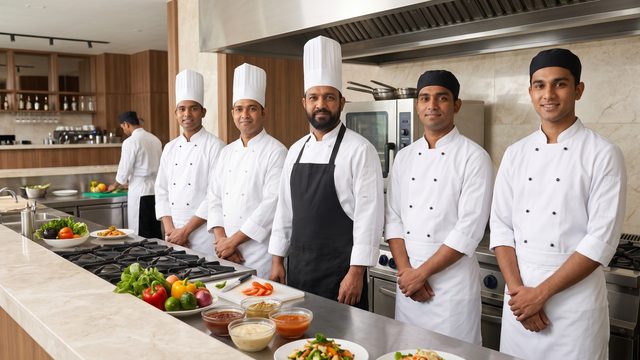
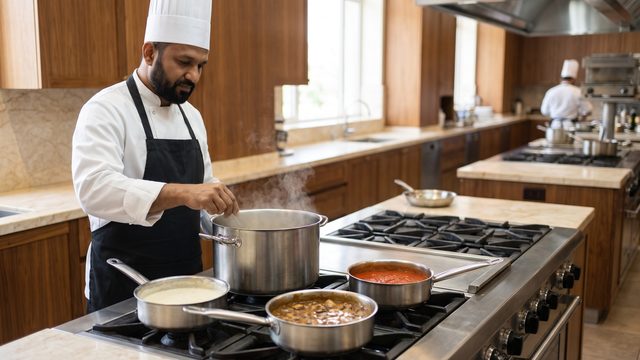
The kitchen at the Grand Horizon Hotel has several sections. The hot kitchen makes curries, grills and breakfast. The cold kitchen makes salads and sandwiches. Then come the bakery, the butchery, and the steward area where the dishes are washed.
0:32
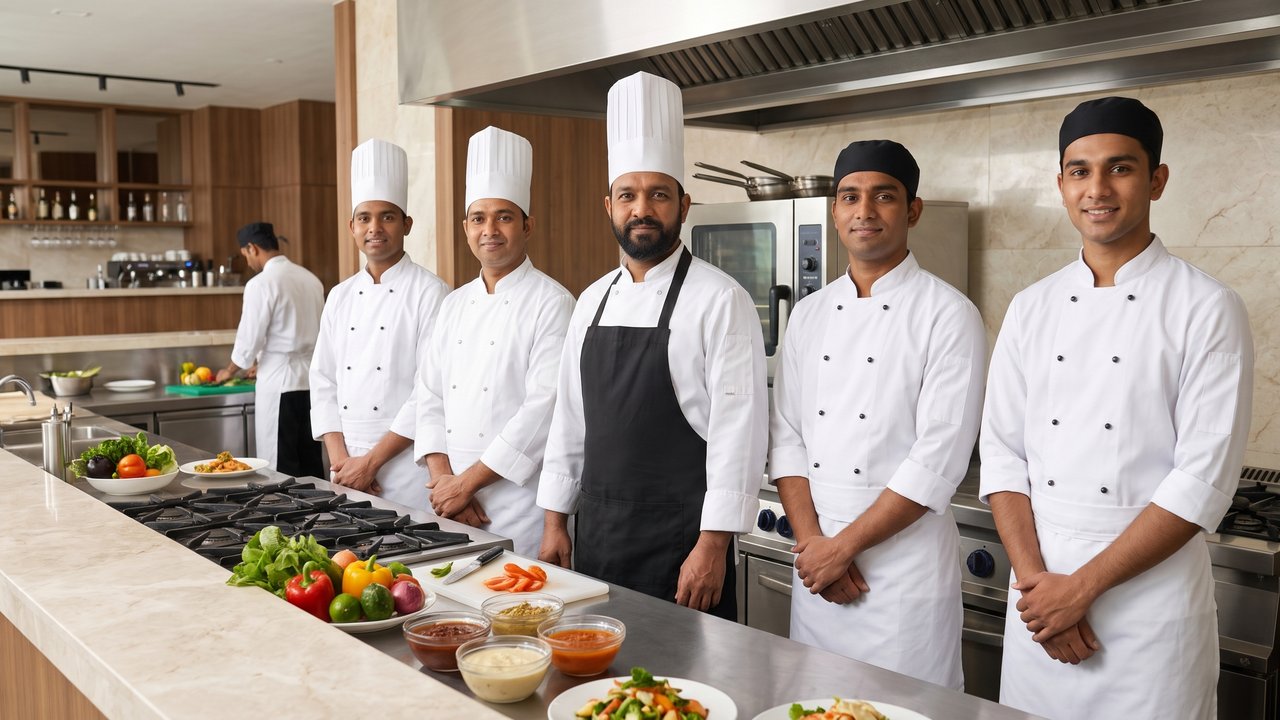
Every large kitchen has a ranking called the brigade. At the top is the executive chef, then the sous chef, then a chef de partie for each station, and at the bottom the commis, who is the new cook.
0:45
The commis learns, prepares, and helps the chef de partie. When the chef gives an instruction, answer clearly: yes, chef. That short reply tells everyone that the message was heard and understood, and keeps the kitchen moving.
1:00
Before you enter the kitchen, put on a clean uniform, cap and apron, and wash your hands well. The full hygiene and food safety rules are in the kitchen hygiene video, so please watch that one too.
1:13
Now the most important phrase: mise en place. It is French, and it means everything in its place. Before you start cooking, all the ingredients, tools and preparation must be complete and laid out, like the tray you see here.
1:28
Imagine ten breakfast orders arrive together and you are still chopping onions. The guest waits and the food suffers. With good mise en place, like the commis here, service is fast, clean and calm, with no panic.
1:43
The first step of preparation is to find out how many guests you have tomorrow. Ask the front office for the number of in-house guests and breakfast guests, and if there is a banquet or a group, get its quantity too.
1:57
Next, write a prep list. Put every task on it and set the order. The jobs that take the longest, like making stock or soaking chickpeas, come first. Chopping and other quick jobs come later in the list.
2:11
Collect everything from the store and the fridge in one trip, following your list. Use the older stock first; this is called First In, First Out. Check the date and freshness of every item as you load the trolley.
2:25
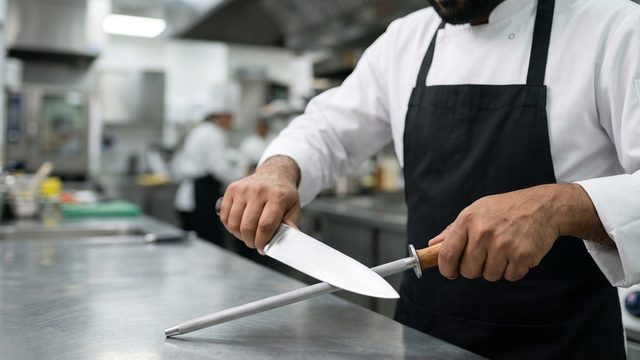
Set up your station: a damp cloth under the board so it does not slip, a sharp knife, a clean towel, a small bucket of sanitiser, tasting spoons in a cup, and a separate bowl for peelings and scraps.
2:40
Keep chopped items in clean containers with the lid on, and label every one: the name of the item, the date and time it was prepared, and your name. Always keep raw and cooked food separate from each other.
2:54
Now the recipe card. In a hotel, every dish has a standard recipe card. It shows the name of the dish, how many portions it makes, the quantity of every ingredient, the method, a plate photo, and the cost per portion.
3:10
Here is an example: masala omelette, one portion. Three eggs, 30 grams of onion, 30 grams of tomato, one green chilli, one tablespoon of coriander, a quarter teaspoon of salt, and one tablespoon of oil. The same quantities every single time.
3:29
Why a standard recipe? So the guest gets the same taste and the same portion every time, whoever cooks it, on the morning shift or the night shift. It also keeps the cost of ingredients under control.
3:43
Do not guess, measure. Weigh solid ingredients on a digital scale in grams. For small quantities use measuring spoons: one teaspoon is about 5 millilitres, and one tablespoon is 15 millilitres. Level the spoon with the back of a knife.
4:00
Measure the portions too. Use the fixed ladle, scoop or spoon for each dish, and weigh meat portions in advance. Giving too much is a loss for the hotel, and giving too little is unfair to the guest.
4:15
For example, if a dish sells for one thousand rupees and its ingredients cost three hundred rupees, the food cost is thirty percent. Every hotel sets its own limit, and the chef designs each recipe to stay within it.
4:30
Reduce waste. Peel only as much vegetable as you need. Clean chicken bones and vegetable trimmings go into the stock container, not the bin; we make stock in a later video. Write anything you throw away in the waste register.
4:47
Keep kitchen talk short and clear. When you pass behind someone, say: behind. When you carry a hot pot, say: hot. When you carry a knife, say: knife. These call-outs prevent accidents in a busy kitchen.
5:01
Clean as you go. After every task, wipe and sanitise the board and the counter, and throw the scraps away at once. On a clean station you work faster, you make fewer mistakes, and nothing gets mixed up.
5:16
At the end of the shift, cover and label any leftover ingredients and put them in the fridge, clean your station, and leave a handover note for the next shift: what is ready, what has run out, and what to order.
5:30
Remember: know your role in the brigade, do your mise en place before you cook, keep a prep list and a clean station, measure and cook by the recipe card, measure your portions, and clean as you go. Thank you.